Friday, September 13, 2019

Bucket List: Around the World


Sometimes I think there is a very fine line between a bucket list item and a completely crazy idea. Which side of that line something falls on is largely the determination of the beholder. What are bucket list items to me may seem like crazy ideas to someone else. With that in mind, here are a couple of my bucket list items.

Many people are familiar with the Jules Verne novel, "Around the World in Eighty Days." There was even a (lengthy) movie made of the book several years back. In case you are not familiar, the title of the book fairly concisely summarizes the plot. The main character, Phineas Fogg, believes that one can travel all the way around the world in eighty days or less. He proposes this belief to his peers at a wealthy men's social club in London, and most of the members consider such an undertaking to be ridiculous. Eventually a wager is placed, and to claim the prize, Phineas Fogg must travel around the world and return to that club within eighty days.

When Jules Verne wrote "Around the World in Eighty Days," in the 19th century, such a journey was not impossible, but was certainly a major undertaking. Today, with jet transportation, such a journey could easily be accomplished in far less than eighty days. But the question is, just how much less? I think, with a lot of advance planning and a bit of luck, one could travel around the world on commercial flights in just eighty hours. Now, to make it just a bit more challenging, such a trip should stop in the same major cities as Phineas Fogg did on his journey. His trip started in London, stopped in Cairo, Mumbai, Hong Kong, Tokyo, San Francisco, and New York, before ending back in London. Coordinating the flight schedules to make that possible in eighty hours or less would be the challenge, and then it would take a bit of luck not to miss any connections along the way.

Now, I do not live anywhere near London, and Alaska is nowhere on that route, so it is not the greatest starting point. But getting from Anchorage to San Francisco is relatively easy, and the circumnavigation could begin and end there. From San Francisco, there are numerous direct flights to New York everyday. There are numerous flights from New York to London everyday as well, and there are several per day from London to Cairo. So far so good. But getting from Cairo to Mumbai is a bit trickier. There is only one direct flight each day. From there to Hong Kong is not great either, but there are a few more options. Hong Kong is pretty well connected with Tokyo, and Tokyo with San Francisco. Despite having several daily options on each leg, they are not really designed to connect with each other in the way that would be needed for a quick trip around the world! There are direct flights available for every leg of the trip, but the trick would be to find the overall fastest, even if it meant a stop instead of direct flights. Individual legs might be slower to allow for a faster trip time, and that is where planning all this gets really complex in a hurry!

Because of the complexity of planning all of this, I think the best way to do it would be as a promotional trip for a major airline. Airlines have buildings full of people who specialize in scheduling, and to have the ability to use their expertise would make the planning process an order of magnitude easier! That said, with or without the assistance of an airline, I would like to take a shot at such a trip! Sure, it is not the best way to really see the world, but that is not the point of such a trip either.

On a related note, I would like to take a more leisurely trip around the world, but in a small airplane. And that trip could start and end in Alaska more easily. The Federation Aeronautique Internationale has specific guidelines for what constitutes a circumnavigation of the world. For an eastbound trip, requirements include crossing all meridians, a course distance of 27,000km or more, and the trip must be completed within one year. Many people have crossed oceans in small planes, but not many have flown all the way around the world. I intend to do so.

Of course, in a small plane one does not simply set out across the ocean the same way the airlines do. Most small planes will either require modification to extend their range significantly beyond their normal maximum, and even with that, most small planes will require fuel at least a couple of times while crossing the ocean. That is where things get tricky. Crossing the Pacific is easier than the Atlantic, even though it is bigger, because there are islands scattered all over the Pacific. In the Norther Hemisphere, the Aleutian Islands make crossing the Pacific relatively simple. The islands have airports all over them, most dating from World War II. The Atlantic is a different story however. There is not a long chain of islands stretching most of the way across the ocean. The most practical place to cross is from Canada to Scotland, with stops in Greenland and Iceland. Even on that route, there are long legs with nothing but ocean for hours. Because of the lengthy water crossings, there are more logistics that go into planning and preparing for a trip like that. More survival gear is required, and it has to be rated for some cold temperatures no matter what time of year the trip happens. Of course, all that gear adds weight to the plane, weight which cuts into the useful load of the plane. That useful load is a limited amount of weight the plane can carry, which includes people, gear, and fuel. It is important to plan so that people, gear, and fuel can be balanced in such a way as to make the trip possible! Crossing an ocean requires a lot of fuel, which also weighs a lot!

Those are my two bucket list items, which to most seem crazy. I have told a few people about them, and usually get similar responses from everyone. To the idea of flying around the world in eighty hours, most people lament the fact that it is not enough time to see the world. Most people do not understand that the point is not to see the world, but rather circumnavigate it. To the idea of flying a small plane around the world, most people have almost nothing to say! The usual response is usually something like, "oh, that's cool." I can always tell that people just have no idea how to respond to something like that, because it is so unattainable to most people that it has never even crossed their mind as something that is within the realm of possibility. I might as well be telling people I want to walk on the moon!

Sunday, July 28, 2019

Catching Up...Again


In the back of my mind, I always know this blog exists. I have had it for years, but my activity on it kind of wanes at times. I tend to be reasonably active on it for a while, then life gets busy and it gets shelved for a while. Consider this post to be me removing it from the shelf, at least for a minute. I'd like to be more active on it, but the simple fact is that there are other things going on in my life that I consider to be higher priority.

Sometimes I wonder about blogs like this. They exist in cyberspace, and they stand as a record of something for their author, but there are many that are never revived. They just go to a blog graveyard somewhere, where they are forgotten and unread, but continue to exist indefinitely. It is an interesting thought.

I am not exactly sure what my goals are with this thing, which is probably why it has been lost in cyberspace for the last nearly five (!!!) years. Having some sort of goals or vision for it would make it far more likely to be updated on a regular basis. Of course, at the minimum, it would be nice to have an update on here more often than once every five years! A lot happens in that time, and it is hard to keep up if posts are that infrequent! At one time I also wanted to expand the different pages on this blog, and make this more of a comprehensive website about my adventures. I think all I ultimately did was make an "About Me" page. It is a start, but a long way from being comprehensive! I need to think about what I want to do with this, and figure out when, and go from there. I will come up with something, I am sure of that.

Monday, September 8, 2014

A Year with a High Performance Vehicle

About a year ago, I purchased a vehicle.  It was on June 20, 2013 that I drove my Mercedes Benz SLK55 AMG to her new home. While it was a used vehicle, it was new to me. It had low miles and had been babied by the previous owner, so it was in exceptionally good condition. When I bought the car, it had just over 12,000 miles on it, despite being a 2006 model year car. The interior and exterior were immaculate, despite the age. Considering I purchased it for around $80,000 less than a new one would cost, I really had nothing to complain about!

When I bought the vehicle, I really only knew a few things about it. I knew it looked nice, handled extremely well, and had a ridiculous amount of horsepower. The horsepower to weight ratio meant it would go fast. I also knew that it was expensive, and that being an AMG model, Mercedes considers it one of their high performance models.

In the past year since I bought it, I have learned a lot more about it. Some of what I have learned is simply statistics. The engine is a 5.5 liter V8, which produces 450 horsepower. On paper, the zero to 60 time is 4.2 seconds. It is electronically limited to 155 mph, supposedly. I have never really had any opportunity to test that. I also learned that AMG is not simply a model designation for Mercedes, but actually a separate corporate subsidiary of Mercedes. The cars they build are their own models. While they usually correspond to existing Mercedes models, they come from a different plant and have different parts. All AMG vehicles are also hand built, and there is a placard on the engine with the name and signature of the person who built our vehicle.

Some of what I have learned has been more experience based. On dry pavement, it is possible to navigate a traffic circle at 50 miles per hour and only make the tires squeal a little. At 40 mph they do not squeal at all. I have also found that with 450 horses under the hood, you can feel like you are driving fairly hard and never get the engine over 3,000 rpm. However if you push the pedal a little farther into the floor and let the engine get to 4,000 rpm, the cars in the mirror get very small very quickly! If you go to the floor with the gas pedal and get the engine up around 6,500 rpm, you feel like your eyeballs are at the back of your head, cars in the mirror look like toys before you even have a chance to glance in the mirror, and you very quickly exceed the speed limit, regardless of how high it may be. I have also found that 100 mph in the Mercedes is surprisingly unremarkable. In all previous cars that I have owned, 100 felt like an achievement. Usually the vehicles would be making a lot of noise, the wind noise would be deafening, there would be at least a little shake or shudder in the suspension, and the handling was slightly questionable at best. In the Mercedes there is no change in the handling from half the speed, only slightly more wind noise, and no shaking at all. 100 mph feels kind of insignificant actually. But you sure cover a lot of ground fast!

I have also learned that, despite having a reputation for being gas guzzlers, the big AMG V8 up front is not as bad as you might think. Of course, it does depend a lot on how the vehicle is driven. Just by way of comparison, my Volvo has a 2.5 liter turbocharged, five cylinder engine. On a really good day on the highway, at about 65 mph, it gets about 29 miles per gallon. For that I get roughly 250 horsepower, which is more than sufficient for getting around town. Driving around town, the Volvo averages around 22 to 24 mpg. The AMG, by comparison, when I drive really conservatively on the highway around the speed limit, gets about 22 miles per gallon. That said, I have found that the AMG is more fuel efficient, in terms of miles per gallon, at higher speeds. In the Volvo, driving at very high speeds really kills fuel economy, because the vehicle has to use nearly all of its horsepower to maintain the high speed. When I used to drive to Billings, I set cruise control at 85 mph, and we did good if we got anything over about 22 mpg. By contrast, when I drive at 100 mph in the AMG, I actually get better fuel economy than at typical highway speeds! The car was designed to go fast, and consequently at 100 mph, it is not using nearly as much horsepower as is available. It may burn a little more fuel in an hour at that speed, but it covers a lot more distance in an hour! I found I can get better than 24 mpg at 100 mph in the Mercedes! In town the numbers are not amazing, although that is where driving habits can have the most effect on fuel economy. Driving conservatively, I can get about 18 to 19 mpg. If I drive pretty hard around town, getting up to the speed limit very quickly at every green light, it does burn a bit more fuel, but even with that, I have never been able to push the fuel economy below 16 mpg. The only explanation I can come up with is that when you drive it hard, it really does not last long, because you get up to speed in no time at all, and then you have no choice but to simply keep driving at that speed.

I have found that the Mercedes has a few little quirks about it that you might not expect from other vehicles. I do not think this has much to do with it being a Mercedes product specifically, but rather has more to do with it being a high performance vehicle and a hand built vehicle. The thing is when a machine builds car after car after car, like any economy car on the road, it builds each one exactly as it built the last one. There is no variation from one vehicle to the next that is not specifically programmed into the machine that builds them. With a hand built car, you get little variations in the build that are hard to notice at first, but you start to see small things when you look closely. For example, in the trunk there is one plastic rivet that just will not stay in place. There are three others just like it which stay in fine, but this one falls out. It is not a critical component, it just holds a piece of plastic molding in place. If you look at the rivet and the hole it belongs in, they are not broken or deformed at all, they just do not quite line up as well as the other three do. Also the rubber seal around the top of the driver's window has one little spot where it pops to the outside of the glass when you close the door. The passenger door does not do it, just the driver's door. One of the stickers under the hood is slightly crooked compared to the one next to it. The AMG badge near the top of the passenger seat pops out once in a while. Little things like that have no effect on the overall performance of the vehicle, but they do remind you that it was a human that built the vehicle, and not a machine. When a person builds vehicles, they all have some slight variations, no matter how many he or she builds.

Economy cars are designed with a different mentality than any performance vehicles. They are built as consumer products, for a market where features like having a fancy radio display, iPhone connectivity, or backup cameras are more likely to sell the car than engine performance figures or handling qualities. Most drivers are looking for comfort and gadgets first, and specific engine and performance characteristics second, if at all. AMG has a completely different approach, but they also build vehicles for a completely different group of customers. First and foremost, AMG products are designed with specific engine performance and handling characteristics as the primary objective. Creature comforts are always secondary to performance. As a result there are occasionally weird little quirks with the car. For example, the passenger window has been a bit uncooperative lately. It still works, it just seems to have a mind of its own. If you roll it down, it may not want to go up later. But if you shut the car off and leave it alone for a while, chances are when you come back, the window will roll back up with no problem. It may not want to roll back down right away, but again, if you give it a while, it might change its mind. It is not a major problem at all, and it really does not effect the performance of the car, but it can be a little frustrating. Sometimes when you make a nice slow stop, the brakes squeal a little. They are not worn out and there is nothing wrong with them, they just squeal. I guess they use different braking materials on high performance cars than on economy cars, and they are just known to squeal on slow stops. If you come racing to a stop and hit the brakes hard at the last minute, they do not make a sound. When it comes to the stuff that matters though, the handling and mechanical performance, the car functions great! It seems that no matter how hard you drive it, it stays just as responsive and performs exactly as expected. It fires right up when you start it, and then right from the moment you put the transmission in gear, it handles great.

We only drive the AMG in the summer. She takes the winters off and stays in a climate controlled garage, waiting for the return of warm weather. The temperature is not really the problem, and we do drive the AMG in the cold, but once snow and ice hit the roads, we put the car away for the winter. During the winter months it can be easy to ask ourselves whether owning such a car is really worth it. We have to share the other car in the winter, which is not impossible but can be a little inconvenient at times. We only really get to drive our AMG about half of the year. In the spring, when we drive the AMG for the first time that year, it only takes about a second to decide that it is totally worth sharing the other car half the year! Alaska may not be the ideal place to own a high performance vehicle, California, Arizona, or Florida would be much better, but it is still a great car to drive, and I enjoy owning such a vehicle, even with its quirks.

Thursday, April 18, 2013

The Land of the Midnight Sun

Since I moved to Montana, I've always had the idea that it would be temporary. While I like Glendive and my coworkers, I have no connection to the place and it was farther from an airport or train station than I liked. During my time there, I applied for a few different jobs with Amtrak. They called me back once for an engineer job in St. Cloud, MN, but I declined because of the pay. I've always wanted to work around passenger trains, but Amtrak pays quite a bit less than freight railroads typically do. That left me thinking about other possibilities. There are few passenger railroads in the USA that are more than a tourist or commuter line, and even fewer that pay like freight railroads. A transfer with BNSF looked unlikely, at least as long as there is an oil boom in Montana and the Dakotas. They are pretty understaffed there to begin with, and unless something changes, the last thing they would do is willingly let people move to other parts of the system. Admittedly, I had not put in a transfer request, but since I took the engineer program, it would have been denied for three years anyway. That's part of the agreement when taking the engineer program.

Back in October, I started thinking that the Alaska Railroad might be a good option, if I wanted to work around passenger trains. I was not really sure what they paid, but I thought I would look into it a bit. I also looked at a few others, like South Shore Line, Florida East Coast, and the Long Island Railroad, though Alaska was more appealing. I sent a few emails, and basically found out that the Alaska Railroad was not hiring then and they were not sure if they would in the spring.

Over the next few months, I checked the Alaska Railroad website regularly to see if anything would open up. Towards the end of February, they posted an opening for a "Locomotive Engineer/Conductor Trainee," and I decided to apply. Several weeks went by, and I was beginning to figure they had found someone else. Towards the end of March, they called me back, and asked if I could be at an interview the following week, just six days later. The interview would be in Anchorage, and would have to be conducted in person. I told them I would be there, and then I booked a flight and asked for a few days off. Fortunately, I had three paid leave days left, so I took those last minute.

The interview was scheduled for a Thursday, so I flew to Anchorage on Wednesday. On Thursday morning, I went over to the railroad offices for the interview. There were a total of nine people there. They started with a four minute reading comprehension test. At first, I thought hat was a mistake, and it must be forty minutes, but it actually was only four minutes. At the end of that, they pulled one person out of the room, and that was the last we saw of him. After that, someone brought a box of safety gear in the room and we were told to grab a pair of gloves, safety glasses, and an orange vest. The next part would be our strength test. We all had to sign liability waivers before we could do that part.

For the strength test, they took us out behind the offices, to the yard. First they showed us how to line a switch, and then had each of us take a turn at it. Next they had us each climb on and off of a freight car. Then they wanted us all to climb on a car and hang off the side for ten minutes. Once we had done that, they showed us how to apply and release hand brakes, and they had us all take a turn at that. Next we all had to lace air hoses, and then we all had to pick up and set down a coupler knuckle. After that, we went back in the office and they scheduled our interviews.

Interviews were scheduled for the same day, with people who had earlier flights home going first. Interviews took about 20 to 30 minutes each. Most of the questions were geared up for people with no previous railroad experience. The fact that I have railroad experience answered all but a couple of the questions. The interview was pretty casual and informal actually, so we had a nice chat and went over everything. At the end of the interview, much to my surprise, the person conducting the interviews told me I had the job if I wanted it. He hesitated for a minute and then told me he wasn't really supposed to tell me that, but he had done all the interviews up to that point, and I was the most qualified person they had had in there so far. He also told me they would be making calls the following week to officially extend job offers.

After the interview, I walked around downtown Anchorage for a little while. The weather was nice, although a little chilly. The next day, I had an early morning flight back to the Lower 48. I returned to Montana and went back to work over the weekend.

The following week, my vacation started. That had been scheduled six months earlier, and ended up being perfectly timed, as we found out later. Originally we had been planning another cruise during that time, but we cancelled that back in December. That Tuesday, the Alaska Railroad called and offered me the job, and I accepted it. We began making plans to move to Alaska. We would have liked to pack everything in a shipping container and meet it in Anchorage, but that was not very affordable. So, we planned to rent a truck, load it with all of our stuff, and drive to Anchorage. It would take four days to drive from Montana to Anchorage. While that whole week was a bit of a blur, several things did happen last minute that really worked out well for us.

We actually found a truck in Glendive to buy. So instead of renting the truck, we ought it, with the plan to sell it in Alaska. The guy we bought it from was just happy to get rid of it, so we may even be able to make a little money on it, and offset the cost of gasoline to drive up here. We had quite a bit of help loading the truck, and so our move went as smoothly as could be expected, especially considering the short notice. Despite the short notice, we were able to get the truck registered, and some new tires put on it.

On Monday, the 8th, we departed Montana, in a snowstorm, ironically. We drove out of the snow in the first couple of hours though. Our goal for the day was Edmonton, 708 miles away. The border crossing, into Canada, turned out to be easier than I expected. I gave them the list of everything that was in the truck. They looked it over, scanned my passport, and that was it. They did not ask to search the truck or anything. It was very easy. We spent less than ten minutes at customs. From there we continued driving all the way to Edmonton. We stopped in Moose Jaw, SK, Borden, SK, and Lloydminster, SK, for gas, and finally arrived at our hotel in Edmonton just after sunset. We were both exhausted from a long day driving, so we got a quick meal and headed off to bed. It seemed like the drive would never end at that point, when we thought about having to do that for three more days.

On Tuesday we got up and hit the road again. That would be slightly shorter of a day. Our goal was to make it to Fort Nelson, Bc, a distance of 656 miles. We filled up with gas just outside of Edmonton, and then followed signs for the Alaska Highway. We stopped again in Valley View, AB, and Dawson Creek, BC, for gas, before getting on the Alaska Highway. The Alaska Highway begins in Dawson Creek, BC, and once on it, we knew we would be on that road until Thursday afternoon. Once on the Alaska Highway, there are few other places to go. Only a couple of highways meet the Alaska Highway. Unlike most highways in the US and Canada, the Alaska Highway is a two lane, undivided highway. It is paved the whole way, but it is much smaller than what most people thing about when they think of a highway. The stretch between Dawson Creek and Fort Nelson is pretty well traveled, though primarily by truckers. From Fort Nelson it is possible to get to Alaska and Yukon, or to Northwest Territories, so trucks going to both places use that segment of the highway. We topped off the fuel one last time in Fort Saint John, BC, and then drove for hours along the Northern Rockies, until we got to Fort Nelson. Fort Nelson is a pretty small place, but has a surprising amount of services for a place as small as it is. It is a major stopping point on the road to Alaska or to Northwest Territories, which probably explains the numerous restaurants, hotels, and gas stations. In fact, the hotels there were considerably larger than those in Glendive, which is three times the size of Fort Nelson. Fort Nelson was about 20 miles beyond the halfway point in the trip.

On Wednesday, we got another early start. Our goal was to get to Whitehorse, YT, which, at 594 miles, would be our shortest day. We filled up with gas and hit the road. We found that to be the quietest stretch of highway. There were times when more than an hour would pass from when we had last seen any other traffic. We made a brief stop in Toad River, BC, to top off the fuel tank. That was the most expensive fuel on the trip, equivalent to approximately $7.50 USD per gallon. After that, the highway headed into Yukon, and left areas covered by 911 service. Up until that day, I had thought 911 was everywhere in the US and Canada, but I was wrong. There are remote locations in Yukon where there is no 911 service. Fortunately, we did not need 911 service. Our trip went quite smoothly. We made a lunch and fuel stop in Watson Lake, YT, and another fuel stop in Teslin, YT. As we got closer to Whitehorse, we ran into some short lived snow flurries. Traffic picked up a little just outside of Whitehorse, as that is the capital of Yukon and the territory's largest city. Yukon Territory is about the same geographic size as the state of California, but Whitehorse only has about 25,000 residents. It is a popular tourist town in the summer, being only about 100 miles from Skagway, AK, which is a busy cruise terminal. Whitehorse also figured heavily into the Klondike Gold Rush, in 1899, and because of that was an industrial city. It is the north end of the White Pass and Yukon Route, a railroad that was built during the gold rush, and being on the Yukon River, it had a fairly extensive shipyard at one time that built paddle ships that sailed up and down the Yukon River. The Yukon River, which is the longest and largest river in North America, runs right through downtown Whitehorse. Whitehorse is over 1,000 miles up the river from its mouth, but even that far up, the river is navigable. The river was an important transportation link during the gold rush, and still sees a little traffic today.

On Thursday, we got up early again, got gas, and hit the road. The goal was Anchorage, some 704 miles away. We stopped for gas one last time before crossing the border, in Haines, Junction, YT. I hoped the border crossing would go as easily as getting into Canada had. Before we got to the border however, we had to navigate the worst frost heaves I had ever seen. They stretched on for over 150 miles, and they were huge. Most of the time, it felt like being at sea on a particularly rough day. Vehicles behind me, which I could see in the mirrors, would completely disappear behind frost heaves and then reappear a minute later. Despite their size, the only casualty of the frost heaves was the sun visor in the truck, which fell off. Fortunately, that was easy to fix. When we arrived at the border, we noticed that there was no one in sight anywhere, other than the one person in the booth. He seemed lonely more than anything else. I asked him if he needed a list of what was in the truck, and he said he did not. All he asked was if I had any firearms, which we did not. He asked nothing else about the contents of the truck, or anything about the cat with Sarah, in the car. He asked where we were headed, and what brought us to Alaska, and told us weather and road conditions between there and Anchorage. I guess when you work more than 90 miles from the nearest town, you are happy to see anyone! He just wanted to chat. Much to my surprise, crossing into the USA had been even easier than getting into Canada had been!

After crossing the border, we continued on the Alaska Highway to our next fuel stop and lunch stop, in Tok, AK. After paying high gas prices in British Columbia and Yukon, the $4.50 per gallon we payed there seemed like a bargain! Tok is also where we left the Alaska Highway, after 1,314 miles. The Alaska Highway continues to the northwest from there, to Delta Junction, about 90 miles from Fairbanks. In Tok however, we turned to the south, on the Tok Cutoff, to head towards Anchorage. We made one last stop in Glennallen, along the famous Trans Alaska Pipeline, to get gas. There we got on the Glenn Highway, which was the final leg to Anchorage. The Glenn Highway, in my opinion, was the most scenic part of the whole trip. It follows the Chugach Mountains for its entire length, and they get more spectacular as you get closer to Palmer. There are mountains, glaciers, and a beautiful glacier blue river all along that road. Once we got to Palmer, traffic picked up considerably, and the highway became a divided highway, more like an interstate. That was the first divided highway we had seen in over 2,500 miles. We got into Anchorage at about 10:00pm, which is when the sun was setting. We were glad to finally be done the driving, although it had been a beautiful drive. I would recommend that drive to anyone. I think everyone should do it, but because of its length, I don't think anyone should have to do it more than once!

Since arriving in Anchorage, a week ago, we have found an apartment and started unpacking. We are waiting for the title to the truck to catch up with us, and when it does, we will sell it. I start work with the Alaska Railroad on the 22nd, which is Monday. Wile there is still a little snow on the ground here, I have to say, it sure is nice to be back! And Montana has had snow more recently than Anchorage anyway!

Wednesday, March 13, 2013

Bucket List

If you follow this blog, you know by now that this is not the place to be if you are expecting frequent, regular posts. I think I average about two a year!

Since I last wrote, in September, I have had a few noteworthy things happen, which I will discuss before getting into the main thoughts of this post. The most noteworthy is that I have received my Locomotive Engineer certification. I began the Engineer Program last June. It started with three weeks of classroom training, at the BNSF Technical Training Center, in Overland Park, KS. After those three weeks, they turned me loose to drive trains, although not by myself. For the next five months, I got to work with different engineers, who taught me all the important things about running different kinds of freight trains. Turns out it is a lot more involved than just making it go fast or slow! At the end of that five month on the job training, I went back to Kansas for a final review and exams. There were three exams, all multiple choice, and two graded simulator runs. The passing grade for everything was 90% or higher. I passed everything on the first try, and returned home afterwards. Once back home, I had to do one final checkride with the Road Foreman of Engines. He apparently thought I did a satisfactory job, and signed my card at the end. Since passing the checkride, I have been qualified to work as either an Engineer or a Conductor.

In February, Sarah and I celebrated our first anniversary. It is hard to believe that we have been married a year. It is also hard to believe that it has now been more than a year since we spent a week on the Nieuw Amsterdam. That voyage was wonderful, but far too short. Hopefully we will be able to go on another cruise later this year or next year at some point. We do enjoy being at sea very much, and going to new places.

Anyway, I got thinking about "bucket lists" the other day after a couple recent conversations I have had with friends, acquaintances, and some coworkers, many of whom have commented on some of the unusual things I have experienced, even in the relatively short time I have been on the planet. One coworker in particular was quite envious of how much time I spent on and around the ocean growing up. He has lived his whole life in Montana, except for vacations, despite his love for the ocean.

For those who have never heard the term, a "bucket list" is usually an informal, and often unwritten list of accomplishments a person wants to have in a lifetime. The qualifications for a bucket list item are rather vague, but they usually consist of things that are not routine or day to day. There does not need to be any significance to them to anyone other than the person making the list. Often they include places a person would like to visit, certain achievements they would like to realize, and various other goals. Most bucket lists items are addressed with an attitude of "when I get around to it," so for many people, placing something on their bucket list means it will probably wait until they have nothing even a little bit more important to do and no other immediate desires for their free time. Usually bucket list items do not include day to day chores and tasks, current projects, or items to be purchased.

What I go thinking about is all the "bucket list" items I have already checked off my bucket list. For a person of 25, I actually have done a surprising amount of "bucket list" things. For example, as a kid I always wanted to go to the Olympics. Well, in 2010, I worked at the Vancouver Winter Olympics, and got to go to several events. As long as I can remember, I have wanted to go to the Panama Canal, and I did that just a few weeks before the Olympics, also in 2010. Now I'd like to go back to the Panama Canal, it was quite fascinating. Ever since I was very young, I wanted to be a train engineer, which, as I described above, I am now. It is not nearly as glorious as I imagined as a kid, actually it is considerably more of a mental exercise than I ever imagined, but that is another goal accomplished. Many of my coworkers know that I'm the guy who lived in Alaska for a couple years, and almost every time I go to work, Alaska comes up in our conversation. Many of them have talked about wanting to go there to visit, fish, hunt, see the Northern Lights, or any number of other things. I want to move back there, and I know several of my coworkers and friends will be jealous if I ever manage to make that a reality!

Of course, there are many things I still want to do. I still would like to visit Europe. In fact, I could probably put together a fairly extensive list of just things I want to do in Europe! And I am sure when I do eventually get there, I will find there is enough to do and see to keep busy for several lifetimes. I also want to return to many of the places I have been, such as Panama, Newfoundland, and British Columbia, just to name a few. Even more locally, there are places I would like to go see and explore, such as the old railroad right of way between Terry and Miles City. I want to go to Medora, to Theodore Roosevelt National Park. I've been through there on the train and eaten dinner there, but I'd like to go see the park. The Beartooth Mountains are another spot nearby that I'd like to go see again. Beartooth Pass is quite incredible. It is one of few places on this continent where the road goes over 10,000 feet above sea level! From Beartooth Pass, Yellowstone Park is not too much farther, and there is plenty to see and do there. It would be easy to spend weeks in the park. I'd also like to get up to Glacier Park, in western Montana, again. I have not been up that way since 2008.

I have often been asked how I have done what I have done, for being as young as I am. My response is always the same. I tell people that you just have to get out and do the things on your bucket list. Obviously, you have to eat and so you have to work, at least a little, but most employers give vacation allowances and days off throughout the year. You just have to sit down and decide what you want to do, and then make the plans to make it happen during one of those vacations. There are tons of cool things to do out there, but if you want to do things like go to the Panama Canal, you need to plan for that. Don't go on vacation to Billings, MT, if you really want to be in the Bahamas! Start planning early to make what you really want a reality. Of course, there is always a little bit of luck involved. It is highly unlikely that I would have gone to the Olympics in 2010 if I had not been browsing for jobs and stumbled upon the driving job I had there. But at the same time, it is not all luck. I was lucky enough to have a job in Alaska for as many summers as I wanted, but before I even heard about that job, I was making plans to go to Alaska for a month in 2009. The job came along a little later, and I got to stay for several months instead, but either way, I would have gone to Alaska in 2009.

Wednesday, August 22, 2012

Blog Update

No really...this is actually an update on the blog, not just a lame title crafted at 1:39am!

I am working on a few updates, and adding pages to the blog.  I'll try not to published stuff until it is finished, at least enough to make sense, but bear with me if funny stuff happens over the next few weeks.  It is a work in progress.  Basically, what is happening, is I am combining two sites.  I have had this blog for quite a while, and I have had a second website, hosted by Google, and I have decided to put the two together.  The main reason for this is because I have thought many times that it would be nice to have a blog with that website, and a website with this blog.  Well, I really do not have the time to maintain two sties, as you can see by the infrequency with which I update this blog, so it makes the most sense to just combine them here.  Why here?  Simple, I like the tools and layout better!

I'll publish a more relevant life update later, hopefully this week.  In a nutshell however, things are going well. I still work for the railroad, and I am in training to be an engineer, which means right now I am actually operating freight trains.  That has been keeping me pretty busy, and I anticipate it will keep me busy through the rest of the summer and into the fall.  I will be done training at the beginning of November.  Anyway, because of the late hour, I will talk more about that later.

Monday, January 30, 2012

Living the Dream, and a few Nightmares

If you ask kids what they want to be when they grow up, most will tell you that they want to be a firefighter, police officer, train engineer, or pilot.  I was the same way when I was a kid, and most adults will admit to having wanted one of those careers at some point in their lives too.  However, most people "grow up" and get "real jobs," sitting in a boring old office in front of a computer screen, which I guess that is fine if they like what they do.  But some of us never really grow up, and we go and get the job we wanted as a kid.  When I was a kid, I wanted to be a railroader most of the time, although at different times I also wanted to be all of the above, plus a garbage man, doctor, veterinarian, mailman, construction worker, car mechanic, and numerous other things.  I still want to be a pilot, although just a recreational one, but that is a different story.  As a kid, when I thought about all the various careers I thought I wanted, they all seemed pretty glamorous and interesting.  People who worked in those jobs seemed like they really led an interesting life.

As I got older, I began to realize that there was reality besides all the glory.  Firefighters, for example, put their life on the line regularly, and really are quite underpaid for their services.  That career, as much as I appreciate those that do it, began to look less appealing to me.  Doctor and veterinarian seemed nice, except they required more schooling than I could comprehend, and they involved blood.  I never have liked either of those!  Police officers keep the community safe, but they too take risks to ensure the well being of often ungrateful people who curse about the officer who wrote their last traffic citation.  Being the guy everyone hates, but also the guy everyone depends on and expects to help them started to seem less attractive.  Being a mechanic still seemed interesting, but more as a hobby.  I took a few classes on mechanics in high school and quite enjoyed them, but primarily as a hobby.  By high school, working for the post office or sanitation department sounded rather dull, and construction management was what I finally decided to study in college.  I still thought railroading and flying sounded interesting, but getting a pilot's license seemed prohibitively expensive.

Twenty years ago, though I said I wanted to work for the railroad, I had a hard time imagining it would ever happen.  Actually, I was pretty sure I would never grow up, and that grown ups had never been kids.  I never completely believed my dad when he told me stories from his childhood.  I was pretty sure he had always been an adult!  The stories were good, and I believed them, just not the fact that he had been a kid once!  As I got older, I did realize that flying or railroading, as awesome as they seemed as a kid, would still have good days and bad days.  Every job is like that.  Occasionally, as I see kids wave to me in the engine, I think about when I was quite young, and Dad used to take us to the local railroad yard, or just the tracks at the end of the street, and we would wave to the train crews, who always seemed so friendly up in the cab.  Those train crews always seemed to be living the dream.

As life would have it, I ended up in the cab, and now I am the one waving to kids and their dads along the tracks.  I am the one "living the dream" now.  Some days it really feels like I am living the dream, as I go to work on warm, sunny, summer days, and put my feet up and open the window and get a pleasant breeze through the cab.  Other days I wonder what I was dreaming, as I do walking inspections of trains in muddy yards, as the rain falls sideways and a cold wind blows!  In any case, I certainly cannot complain that I do the same thing every day!  That is one of my favorite things about working for the railroad, every day has new challenges and surprises, and it really never gets boring, even if the weather does get lousy.

I get asked a lot, by my non railroader friends, and often their children, what it is like to work for the railroad.  Most of them see me as the guy that does what every kid in the world wants to.  In some of the quiet, night time hours, when little is happening and I have a little time to think, I have thought about all the things I could possibly tell them about railroad life.  There are so many things that go on besides the "dream" that kids imagine it is.  In many ways it is one of the scariest, most stressful jobs I have ever had.

I could tell them what it is like when you are running on some really beat up old track, and the locomotive is rocking rather badly.  I could tell them what it is like when that rickety old track finally gives under the weight of a 392,000 pound engine, and it leaves the rails, and the ride really starts to get wild.  Even at a low speed, the first thing you think about is how out of control the situation is.  You feel completely helpless, because there is no way to stop the engine or control where it goes.  The seconds seem like hours, and all you do is wonder when it will stop.  When everything does finally stop, and the dust settles, you look around for a second, and then hop off the engine to see what the damage looks like.  Even though the engines are still upright and in the track area, something just looks very wrong, kind of like looking at a beached whale.  It looks out of place and awkward.  The rails are bent and twisted in all sorts of weird angles, making them resemble paperclips more than railroad tracks, and all that is left of ties is a whole lot of splinters.  As you take in the situation, you just think how happy you are that it is not your responsibility to clean up the mess!

Derailments are just one of the extras to "living the dream," and fortunately I have managed to miss most of them, and none have been serious at all.  A much scarier and more stressful extra involves grade crossings.  As the train approaches a crossing, the gates light up and descend across the road, and bells ring.  Additionally the horn and bell are sounded on the locomotive.  Yet it is relatively commonplace to see vehicles dart around the crossing gates, right in front of an oncoming train.  Some dart around as the gates start down, and there is still enough time for them to get by before the train gets to the crossing.  Others dart across at the last second.  Sometimes larger vehicles surprise you, and dart across the tracks.  I could tell people about the time the driver of a tanker truck decided he could make it across the tracks and badly misjudged the timing.  The cab of the truck made it across, which is perhaps the only reason he survived, because a 17,000 ton coal train takes well over a mile to stop from 50mph when it is headed downhill.  When you see a tanker in the crossing, you think the worst.  Fortunately it was full of water.  The trailer was hit and split in half, sending the rear two thirds spinning off into a field.  The front third, still coupled to the tractor portion went flying and landed in a ditch.  Much to everyone's surprise, the driver not only survived, but only had a few minor scratches and bruises.  He was one of the lucky ones.  It is people like him, and the many others that dart around the gates, that give most train crews regular nightmares about their job, and mostly about crossing incidents.

I could also tell people about the crossing with an elementary school nearby, and about the time we watched in horror as a teacher led her class of about 25 second graders across the tracks after seeing the gates start down.  At 30 mph, a train simply does not stop before the crossing once it is close enough to activate the gates.  In desperation we did the only things we could do: keep blowing the horn, ringing the bell, shout at them knowing they could not hear us, and go to emergency braking.  Fortunately those children were a lot smarter than their teacher and most of them waited, and actually waved to us.  We had to stop to pick up cars there anyway, and when we did come to a stop, both the engineer and I had a several choice words for that teacher. She seemed slightly embarrassed about having two people, who looked young enough to be her sons, yelling at her in front of her whole class and a coworker, but otherwise she really did not seem phased by the incident.

When people, especially kids see us, and think we must be living the dream, they never think of the "extras" we get for it.  I never thought of it when I was a kid.  Sometimes people ask what railroading is like.  Usually a few thoughts run through my head on what I could say, but ultimately I tell them it is great.  I really enjoy my job, and I usually make that pretty obvious.  I mean, they pay me to play with trains!  It just does not get much better than that!  I encourage kids to pursue it if it is something they really like, and I always fail to mention the "extras."  I think it is better to let them keep dreaming.  Reality will catch up with them sooner or later anyway.

Wednesday, August 31, 2011

Six Months

Yeah...it has been a while since I last posted.  Sorry.  Here is what I have been up to though!

A few days ago, I hit six months working for the railroad.  For the last few years, I have been in seasonal work, so this is the longest consecutive time I have worked at the same place for a while now.  In that time, here are a few things that I have been involved in:


  • Traveled 10,291.8 miles by rail
  • Moved about 610,000 tons of freight
  • Spent approximately 950 hours on trains
  • Traveled on 105 different trains
  • Handled approximately 12,375 rail cars
  • Switched 1 passenger train
  • Picked up about 185 cars from customers
  • Dropped off about 180 cars to customers
  • Dealt with mechanical problems on 3 occasions
  • Fixed 1 broken knuckle
  • Rode out 1 derailment

I could not even make a slightly educated guess as to how many switches I have lined or track warrants I have copied.  Both those activities happen numerous times every time I go to work.

I know I have only been working for the railroad for six months, which really is not very long.  While the above statistics seem like a lot, I still feel very new, and I am still learning how everything works.  There is a lot more to know than they could possibly cover during the training period, and I continue to learn more every time I go to work.

Saturday, March 26, 2011

On the Job Training

For the last three weeks, I have been doing on the job training.  I started out working on the freight trains between Glendive and Forsyth, about 125 miles west of here.  That went well.  The schedule was a little crazy, but I guess I had better get used to that!  I was mostly on either empty or loaded coal trains, depending on the direction I was going.  I was on a few other freight trains too though.  Empty coal trains are some of the lightest trains we have go through here regularly, and loaded coal trains are among the heaviest.  I was on several loaded ones that weighed over 17,000 tons!

Adter spending most of the first week on the road, I was given a different assignment.  I was moved to the yard, as a Utility employee.  The utility is responsible for moving locomotives around.  Glendive has a roundhouse and a service area, so a lot of locomotives come off trains when they get here to be fueled, serviced, or repaired, if needed.  Generally we fuel locomotives if they have less than 1,500 gallons in their tanks.  Most hold around 5,000 gallons of diesel.  Sometimes locomotives also need to have repairs made.  In that case, we would also pull them off the train and bring them over to the roundhouse.  Before trains go out again, they need to have locomotives added, and the utility crew was also responsible for that.  The roundhouse has four tracks, called ready tracks, where they would park locomotives that were ready to go out on trains.  We would go over there and pick up locomotives and then run around the yard and put them on the trains they were assigned to.  If that was all done, then the crew taking the train did not have to worry about getting their engines before they left.  They could get in the train and head out of town right away.  That saves them a lot of time.  Besides that, utility crew handles a lot of the other odd jobs around the yard area.  Sometimes it is as simple as throwing switches for a train that is coming in.  Other times it is walking the length of a train to conduct an air test and inspection.  Walking trains always takes a while.  Most of the trains are over a mile long, and the air test requires an inspection of both sides, so you walk the length of it twice.  The first train I had to walk was over 7,000 feet long, because it did not fit in the yard track it was on.

I spent about a week working in the yard, on utility, and then I was supposed to go on the helper locomotives.  When our coal trains head east from here, they get a helper locomotives.  Some other trains also get a helper, but the coal trains always get one.  They go up Beaver Hill, into North Dakota.  The helpers push form the rear, and basically just give them some extra horsepower over the hill.  Once they are at the top of the hill, the train stops, they uncouple the helper locomotive, and the train continues east, while the helper locomotive returns to Glendive.  There was a mix up with that though, and I ended up being put back on the road to Forsyth.  I did not get to do the helpers this time around.  I spent all of this week running back and forth between Glendive and Forsyth again.  This week was a little crazy though.  At the beginning of the week, there was a derailment in Idaho, on a different line.  That meant that a lot of trains were detoured over this line, while they cleaned up the mess on the other one.  Things were busier than normal, which also meant everything went a bit slower than normal.  Later in the week, there was a minor derailment in Dickinson, ND, which is on this line.  Because of that, nothing could get through, and so everything was quiet for a day and a half while they sorted that out.  Those two derailments really made things crazy around here, even if they were not here.

Next week, we go back to the classroom.  We will be in the classroom for the next three weeks.  In two weeks, we have our first test.  It is called the Hostlers Exam.  It is a basic exam, going over basic operations, air tests, safety rules, and operation rules.  We have two opportunities to pass that, with a 90% or more.  If we do not pass it, we continue with training and take it again at the end, with the rest of our exams.  If we do pass it, we are licensed as a Hostler.  That allows us to operate engines without any cars and perform conductor and brakeman duties around the yard.  In three weeks, we take a practice exam.  The practice exam does not effect our training or our job, but it gives the training people an idea of how we are doing for the real thing, which will be six weeks later.  Ideally, most of us will get a passing grade on it.  We will be studying a lot more rules over the next few weeks, and in three weeks, we are doing more on the job training.

So that is my life.  I have no schedule anymore.  Sometimes I go to work at 11:30pm and work until lunch time.  Other days I go to work just after breakfast and work until dinner time.  Basically, if I am not at work, I spend most of my time sleeping, so I will be rested enough when the phone rings to go to work again.  The classroom will be on a more regular schedule for the next few weeks.

Well, that is all I have to say!

Friday, March 4, 2011

Switching

This post comes at you from eastern Montana!

Last Saturday, I made the LONG drive from Utah County to Glendive, MT.  It took 13 hours, and I covered 927 miles.  Along the way I made exactly three fuel/rest stops, in Idaho Falls, ID, Bozeman, MT, and Miles City, MT.  It was a very long drive, although shortened a bit by the ability to drive at relatively high speeds for most of it.  It started out in the snow, but that only lasted as far as Ogden, UT, which was fortunate.  I really did not want to drive in the snow if I did not have to.

On Sunday, I managed to find the ward here, the Glendive Ward, and get to church.  The church is located right next to the railroad tracks, so it is actually a pretty noisy place at times.  At least it does not shake whenever a train goes by!  The ward is well attended, but it also covers a huge area!

On Monday morning, I began my first day at work with the BNSF Railway.  Several of us met in a conference room on the second floor of the Glendive station building.  The class was supposed to have eight students, however one did not show up, which is a bit odd, because apparently he called our instructor and talked about coming, and he formally accepted the job last week.  But when Monday came around, he was missing in action.  Since then he has not called or emailed or made any contact.  At this point he has lost the job even if he does turn up somewhere.  We have covered so much stuff that catching up would be difficult.  We began class as normal, despite the absentee.  Monday was a lot of very general safety information.  We started reviewing the rule book, which is the size of a toddler, and going over safe practices around trains.  We learned about the "Eight Deadly."  They are eight things that pretty much guarantee a very serious injury or death of you do them.  We reviewed a lot of rules, and watched some short safety videos.  Most of the stuff we covered on Monday was pretty obvious, and it makes you wonder how stupid someone was to get such a rule in the book!

On Tuesday, the coldest day all week, we decided to go outside.  It warmed all the way up to -2.  We learned some basic operations such as setting hand brakes on cars and coupling air hoses for the brake system.  We also learned how to disassemble the couplers and replace the knuckles if they break.  We were probably only outside about an hour, but it doesn't take long to want to somewhere warm when it is that cold!  The rest of the day was spent indoors, with more rulebook stuff.  Wednesday was even more rule book stuff.

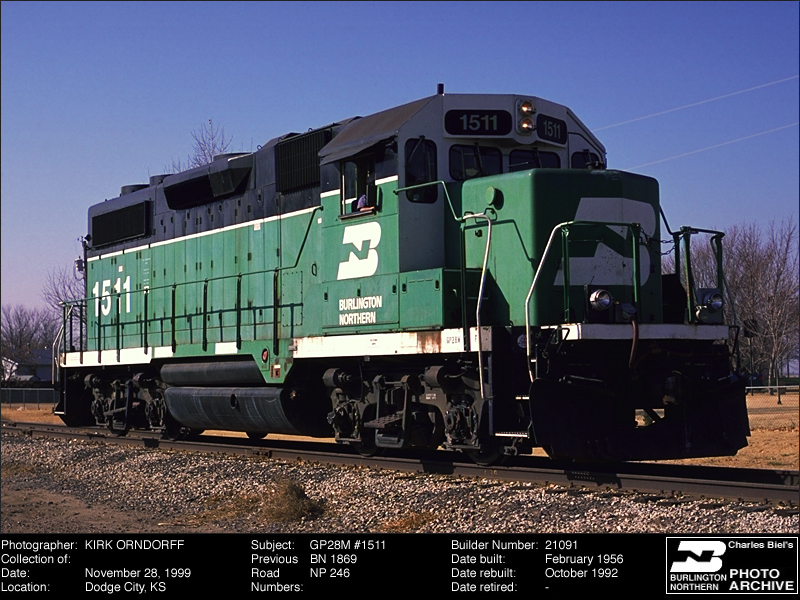
Photo from www.trainpix.com
On Thursday things worked out such that we could go outside and actually use a train.  Not only that, it was the warmest day all week!  The switch engine had a crew, and they had an hour to work with us in between their regular duties, so we all got to work around a moving train.  There were three freight cars we found laying around, which were not being used, so we decided to practice coupling the engines to them.  Of course, being conductor trainees, we were not be operating the locomotives, but rather spotting for the engineer.  We took turns using hand signals to instruct the engineer to pull away from the cars left on the siding, and then we would guide him back to make a joint, or coupling.  Once the coupling was made, we would give him a signal to indicate that we would be stepping between the locomotive and car to couple the air hoses.  Once that was done, it was the next person's turn to start the process over again.  We were also instructed to go to the cab of the locomotive, so we could see the hand signals from the engineer's perspective.  We had a pair of locomotives, and so the engineer was sitting well over 100 feet away from the coupling, in the far locomotive.  He was also facing away from the coupling, meaning  he was watching these hand signals in a small mirror outside his side window.  We felt like we were giving huge signals, but from the cab, they did not look quite so huge!  We all got to ride back and forth a couple times to get an idea of what he sees and how he reacts up at the head end during such an operation.  After about an hour, we all had a chance to do that, and so we headed back inside.  The locomotives and cars we were using wandered off with the switch crew, and we picked up where we had left off with rules and practices.

Today was a very short day, but it did involve more rules.  We spent a couple hours studying the rules for conducting different types of air brake tests on the trains.  Those rules and exceptions and really complex.  Not only do we have to know when to conduct such tests, we have to know how.  Typically it is the conductor who takes charge of such tests.  On Monday we have to be back at work, and we will be putting ourselves on a call board for trains.  Starting next week, we will be doing on the job training.  We will mark up with a crew and ride the trains with them to get an idea of what operations are like outside of the classroom.  We will have three weeks of on the job training before we return to the classroom again.  This job is a lot of fun, but I think it will be better in warm weather!

That locomotive above is one of the pair we were using yesterday.  I did not take the picture, but it is the actual locomotive that someone else spotted out there.